No drawing?
One sample, no drawing, and every factory says no
You have a prototype, a competitor's part, or something you bought online. No 2D drawing. No 3D CAD. Every quote request comes back with the same sentence: send us the drawing first.
A missing drawing isn't a missing product. The part in your hand already contains every dimension anyone needs — it just hasn't been written down in a format a mold shop can work from. That translation is a real service, and it takes about 3 to 4 weeks.
The order things happen in
- 01
Quote signed — reverse engineering starts
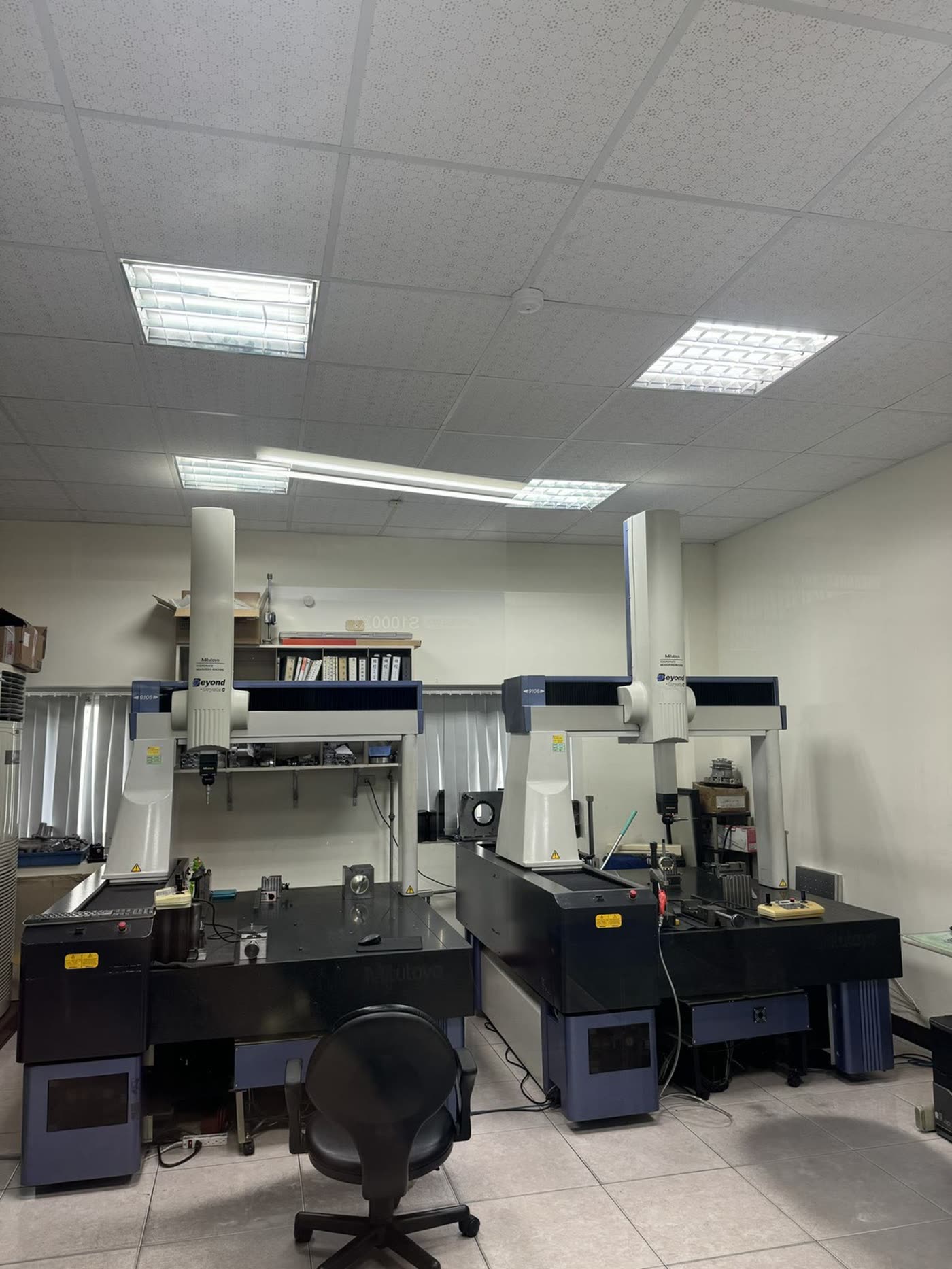
3D scan plus manual measurement. The scan captures surface geometry; hand measurement catches what a scanner reads badly — internal features, sharp edges, critical fits.
- 02
Rebuild into 2D and 3D CAD
Not a scan mesh emailed back to you. A real parametric file a mold designer can open and work from, drawn against what we can actually cast and machine.
- 03
You review the drawings your call
The files come to you before anything else happens. Wrong at this stage costs a revision.
- 04
3D print — no extra charge
Once the drawings are signed off, we print the part. You put it next to your original and check it in your hand — fits, clearances, proportions. How long it takes depends on the size of the part.
- 05
You confirm the printed part your call
Second checkpoint, still before any steel is cut. Wrong here costs another print.
- 06
Tooling begins
Only now does mold fabrication start — 60 to 90 days, and the expensive part of the project.
Two checkpoints before the expensive part
Steps 03 and 05 are the point of this whole sequence. Both are yours, and both happen while a mistake is still cheap — a revision, or another print. The print isn't billed separately. It's part of reverse engineering, because a file nobody has held is a file nobody has really checked.
Most reverse-engineering quotes skip the second one. They hand you a file, you approve a render on a screen, and the next physical object anyone sees is a part that came out of a finished mold. If the geometry was wrong, you find out 60 to 90 days and one tool later.
Why "we'll scan it for you" usually isn't enough
Plenty of shops will scan a part and email you a file. Then you're back where you started — holding a file, chasing a mold shop, a foundry, a machine shop, and a finisher separately, and hoping the file works for all four.
Every file rebuilt here is drawn around what we can actually cast and machine. What gets drawn is what gets made, because the person drawing it knows which mold shop is going to build the tool.
If the part in your hand is discontinued and worn from years of use, there's a decision to make before any of that: what stays the same and what changes, settled while the file is still a file.
What to send
The physical sample is ideal. Photos with a ruler in frame are enough for a first conversation about whether it's worth going further. If your part has internal geometry that matters, say so early — that's usually the thing that decides whether scanning alone is sufficient.
When we'll tell you not to bother
If the original part was designed for a process that doesn't make sense at your volume, reverse-engineering it faithfully just copies someone else's constraints into your tooling budget. In that case the honest answer is that the part needs redesigning, not duplicating — and you'll hear that before you pay for a scan.